Welcome to Our Vanam India Foundation - Trust Reg no : 99/2015
Have any question? ++91 4255 255 256

S.F.No.1/3, Kovai Trichy Main Road,
Kalivelampatti Post,
Opposite to Kongu Kalyana mandapam- Tamil Nadu, Palladam - 641662
- Send your mail at
- trustvanam@gmail.com
- Working Hours
- Mon-Sat:9.30 AM To 6.00 PM
Blog
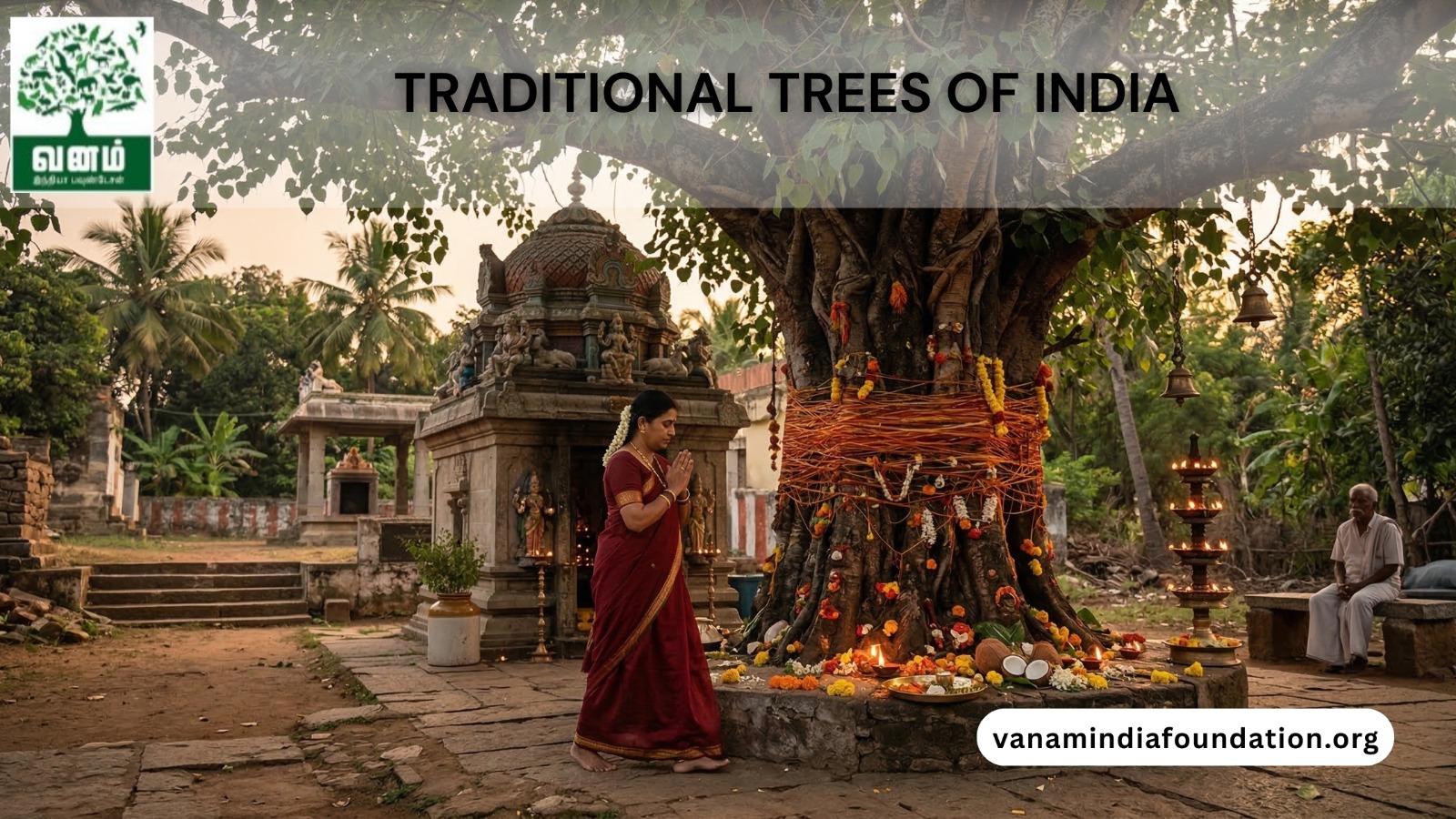
Trees have always held a special place in Indian life. Traditional trees of India are not just part of the landscape; they are woven into our myths, temples, and daily rituals. Many of these trees are seen as gateways between the earth and the divine, carrying both spiritual and practical value.
What Are Traditional Trees of India?
Traditional trees of India are native species that have been respected and used for centuries in worship, medicine, and village life. Trees like the banyan, peepal, neem, and tulsi are planted near homes, temples, and crossroads because they are believed to carry protective energy.
These are also counted among sacred trees in Indian astrology, where each tree is linked to specific planets, deities, and life energies. Understanding zodiac trees for each sign with Vanam India Foundation’s tree planting initiative helps connect these ancient beliefs with modern environmental efforts. Planting or sitting under the right tree is thought to bring peace, health, and balance.
Why Do People Worship Trees in India?
In traditional tree worship India, trees are not seen as simple plants. They are believed to house spirits, gods, and cosmic forces.
For example:
1. Many people circle the peepal tree for health and children.
2. Married women tie threads around banyan trunks to seek protection for their husbands.
3. Neem leaves are hung on doors during festivals to keep away disease and bad luck.
This practice turns simple planting into a spiritual act, connecting daily life with nature and astrology.
Sacred Trees in Indian Astrology and Their Roles
Astrology and nature walk hand in hand when it comes to sacred trees in Indian astrology.
Some key examples are:
1. Peepal (Bodhi) tree – Linked to enlightenment and wisdom; often connected with the Sun and spiritual growth.
2. Banyan tree – Symbol of long life and stability; associated with Saturn and time.
3. Neem tree – Represents purity and protection; linked with health and Mars‑related energy.
These trees are chosen for rituals, temple gardens, and even in homes based on an individual’s zodiac traits and planetary influences.
How Traditional Trees Help Nature and People
Beyond religion, traditional trees of India support the environment. They improve air quality, reduce heat, and provide food and shelter for birds and insects. The environmental benefits of planting trees for a sustainable future highlight why protecting and planting these trees remains important even in modern times. Their roots hold soil, preventing erosion, while their shade cools villages and streets.
Communities that keep traditional tree worship India alive often find that these trees also become centers for social gatherings, storytelling, and cultural learning.
Planting Traditional Trees Today
You do not need a big temple to honor these trees. Even a small courtyard, balcony plant, or community park can follow the same practice. Select a traditional tree of India that fits your space and climate, and treat it with care and respect. You can also learn more by exploring the many names of the Banyan tree in India, a tree that holds deep cultural, spiritual, and ecological significance across the country.
Vanam India Foundation encourages people to revive these ancient practices by planting native and sacred trees that are both eco‑friendly and spiritually meaningful. Join our mission to grow traditional trees of India and create cleaner, greener, and more peaceful neighbourhoods for all.
To know more, visit our website https://www.vanamindiafoundation.org